
Implant Dentures Sydney
Implant Overdentures
Implant supported dentures are removable dentures that connect to dental implants for additional retention. At Urim Denture Clinic Sydney, Dental Prosthetist Isaac Hoshi plans the denture component around your mouth, implants and everyday needs, in coordination with the clinician responsible for your implant care.
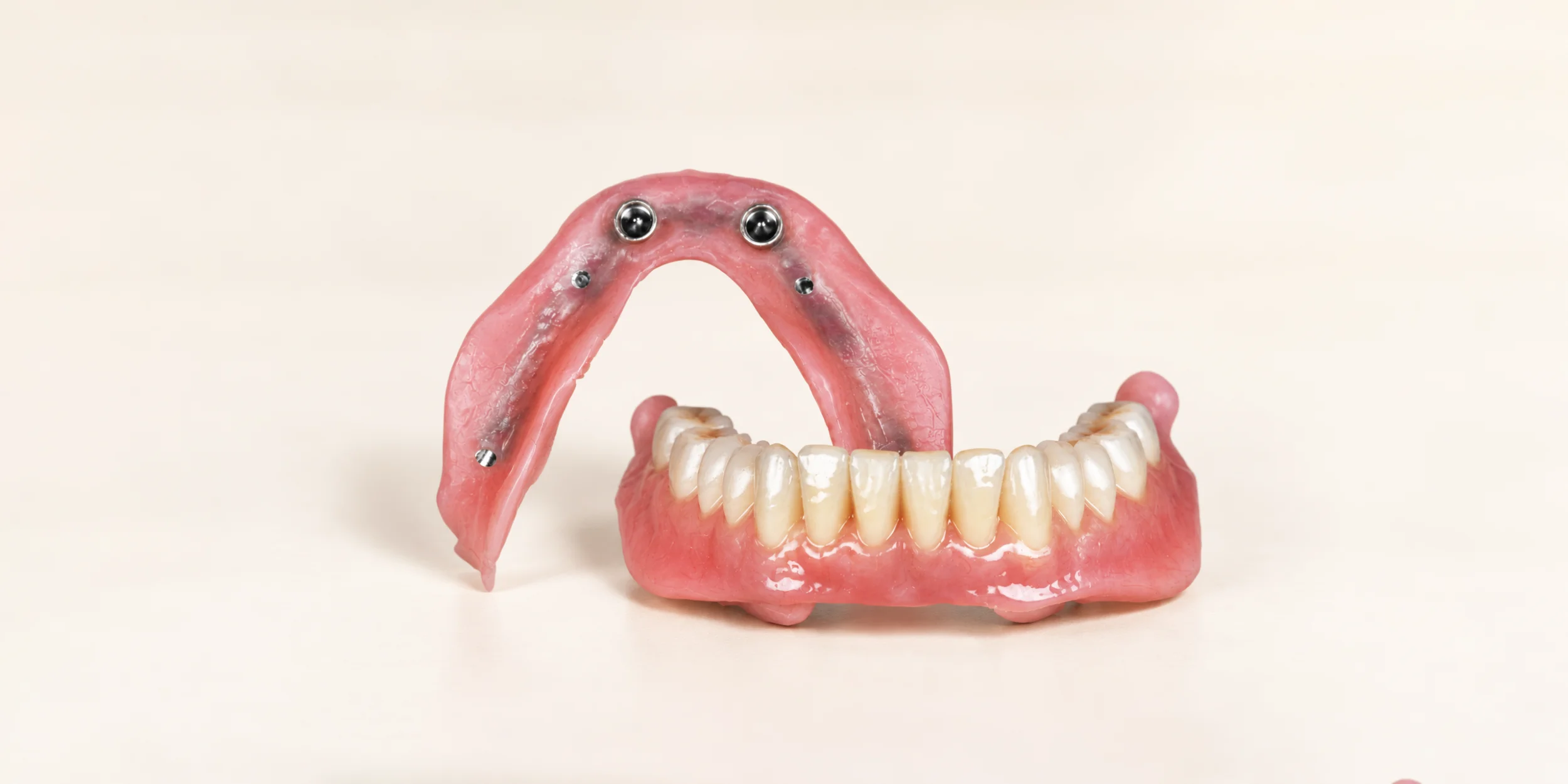
Implant overdenture care Sydney.

What are implant supported dentures?
Implant supported dentures, also called implant retained dentures or implant overdentures, are removable dentures that connect to dental implants placed in the jaw. The implants and their attachments provide additional retention compared with a conventional denture that rests on the gums alone.
The denture is still removed for cleaning. This is an important distinction from a fixed implant-supported bridge, which remains attached and follows a different treatment and maintenance pathway.
Dental implants involve surgery and must be assessed, planned and placed by an appropriately trained dentist or dental specialist. Isaac’s role is focused on the removable denture component and its relationship with the implants, attachments, bite and appearance.
When may an implant overdenture be considered?
An implant overdenture may be considered when all or many teeth are missing and a removable denture is the preferred restoration. It may also be discussed when a conventional denture lacks sufficient retention for a patient’s needs.
An assessment may be helpful if:
- Your current denture moves or feels unstable during everyday use.
- You would like to understand whether implants could provide additional denture retention.
- You already have dental implants and need a new or replacement removable denture.
- Your existing implant overdenture or attachment components need review.
- You are comparing conventional full dentures, removable implant overdentures and fixed implant options.
- Your dentist or implant clinician has referred you for the denture stage of treatment.
Not everyone is suitable for dental implants. Your oral health, general health, available bone, existing implants, treatment history and ability to maintain the area all need to be assessed by the relevant clinician.
Removable implant overdentures and fixed implant teeth are different
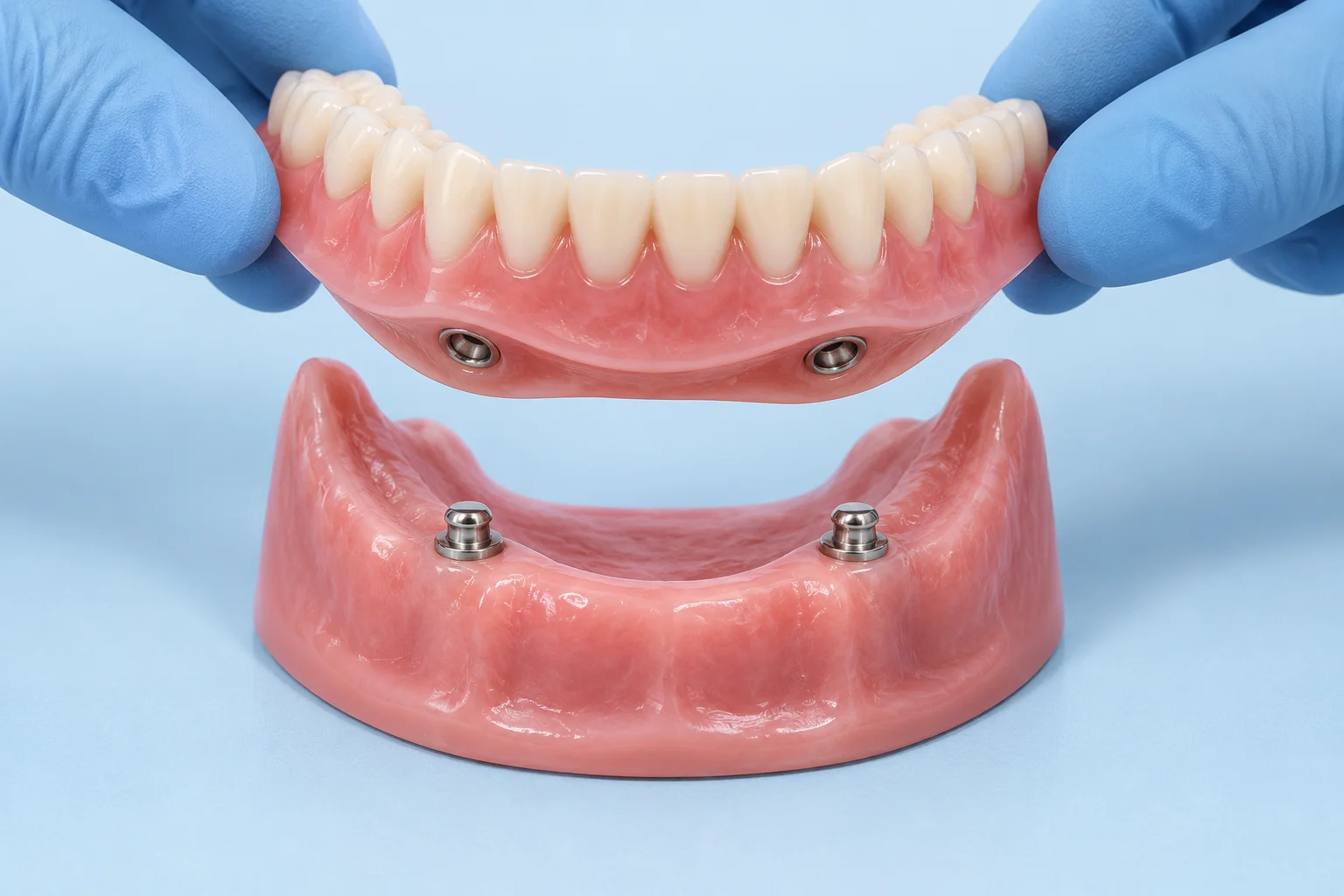
Removable Implant Overdentures
A removable implant overdenture connects to implant attachments but can be taken out by the patient. The implants assist with retention, while the denture and oral tissues still require regular cleaning and review.
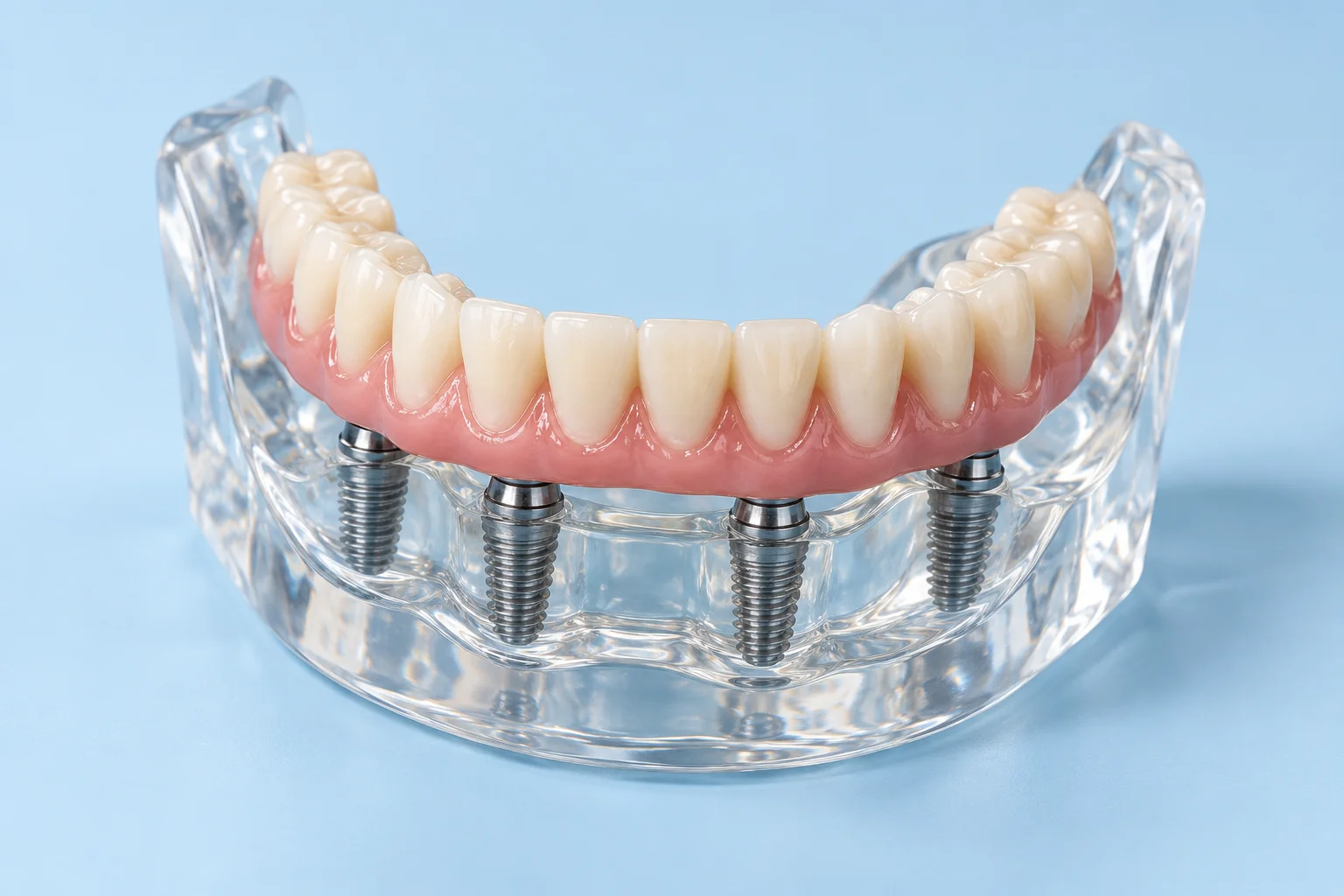
Fixed Implant-Supported Teeth
A fixed full-arch restoration is attached to implants and is not routinely removed by the patient. It has different clinical, surgical, technical and maintenance requirements. Urim’s implant overdenture page relates to removable denture treatment.
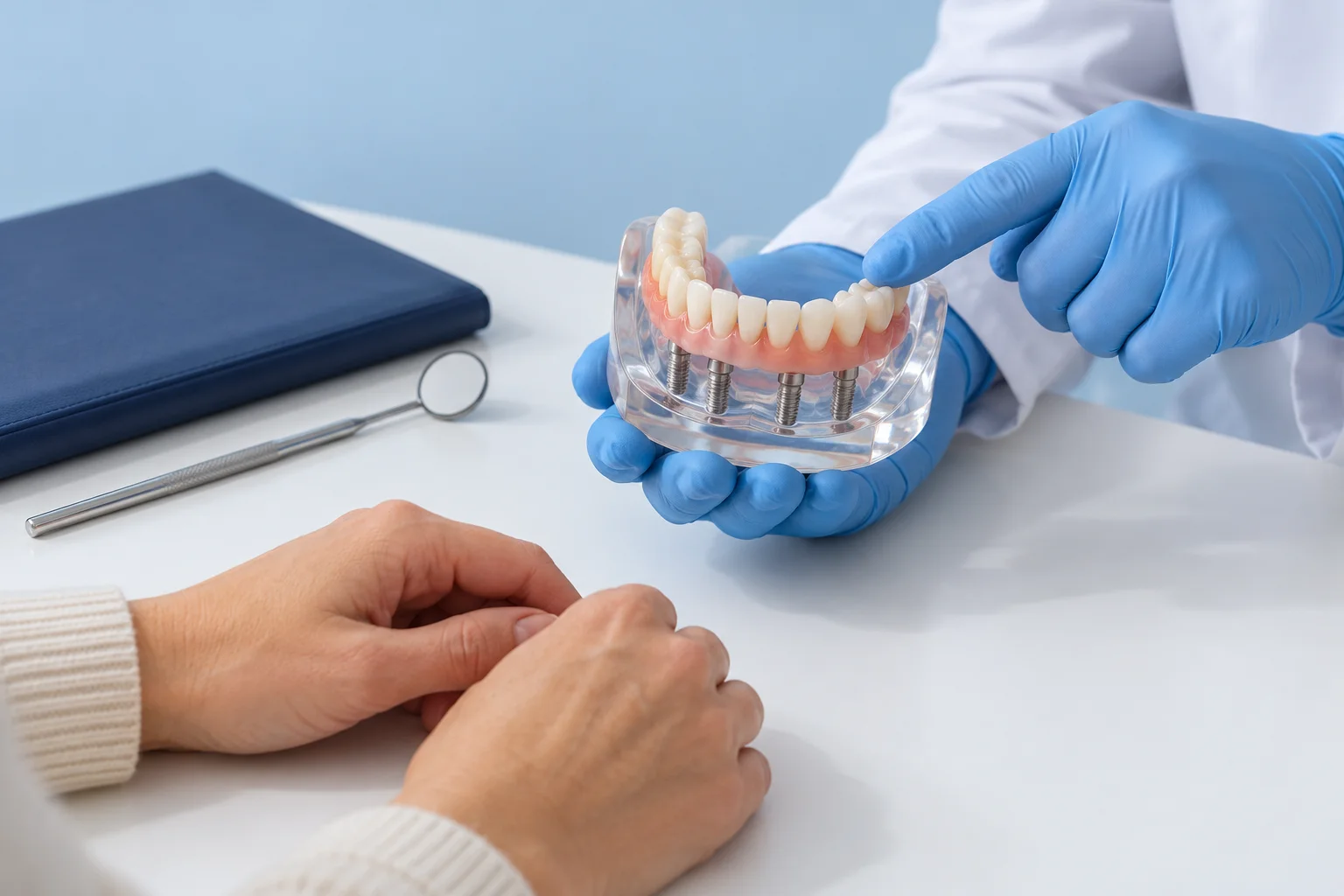
Understanding the Appropriate Pathway
The right option depends on your health, anatomy, existing teeth or dentures, implant assessment, maintenance needs and personal priorities. Isaac can explain the denture considerations and work with the dentist or specialist managing the implant component.
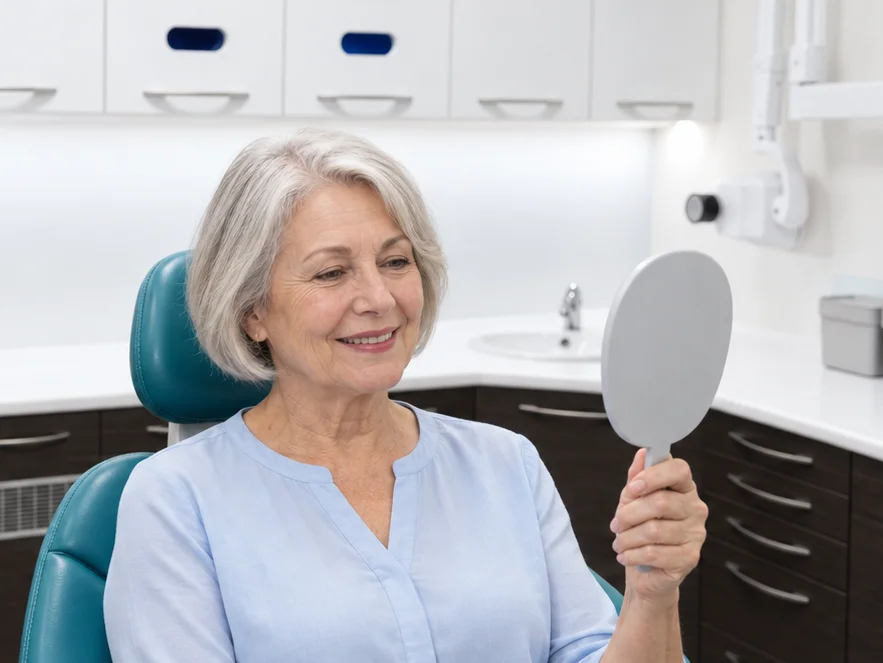
Implant overdentures planned for everyday use.
How implant overdenture treatment is coordinated.
Implant overdenture treatment involves both surgical and denture stages. The exact sequence depends on whether implants are already present and on the treatment plan agreed between you and your clinicians.
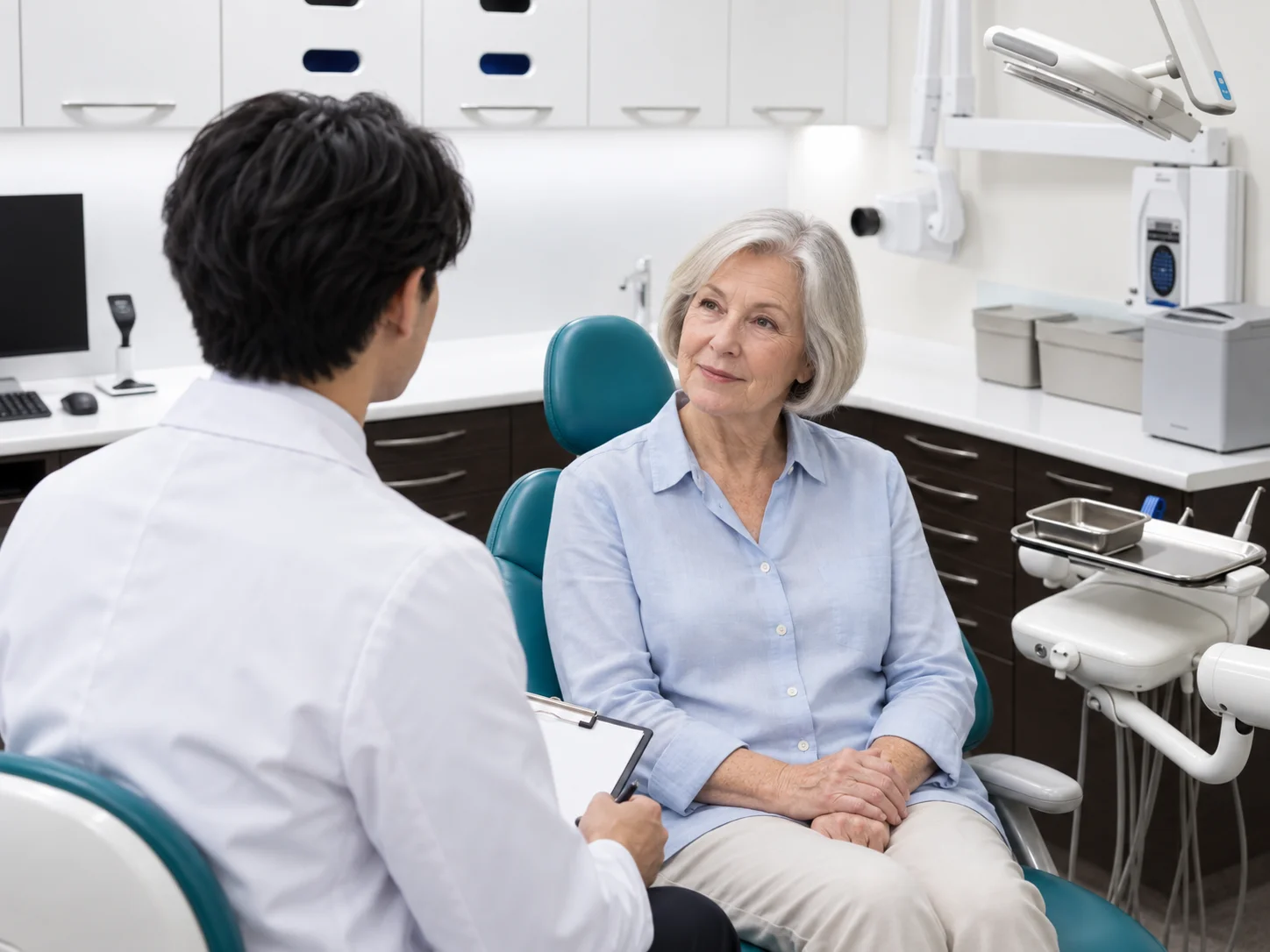
Step 1
Denture consultation and assessment
Isaac discusses your concerns, existing denture experience and what you would like to improve. He examines your mouth and any current denture, and reviews the available implant information.
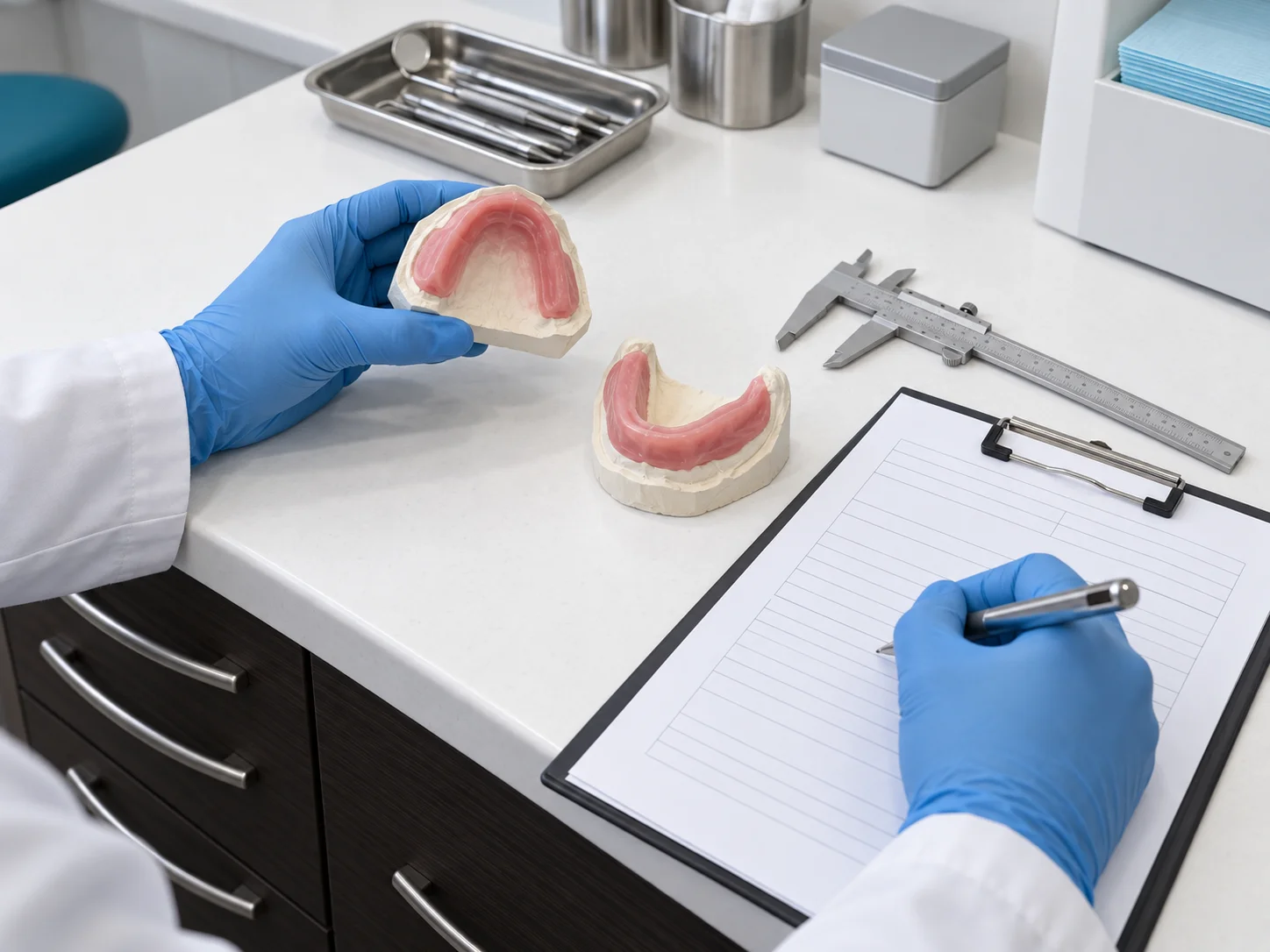
Step 2
Implant assessment and shared planning
If implants are not already present, a dentist or dental specialist assesses your suitability for implant surgery. Communication between the implant clinician and Isaac helps align the proposed implant positions with the removable denture plan.
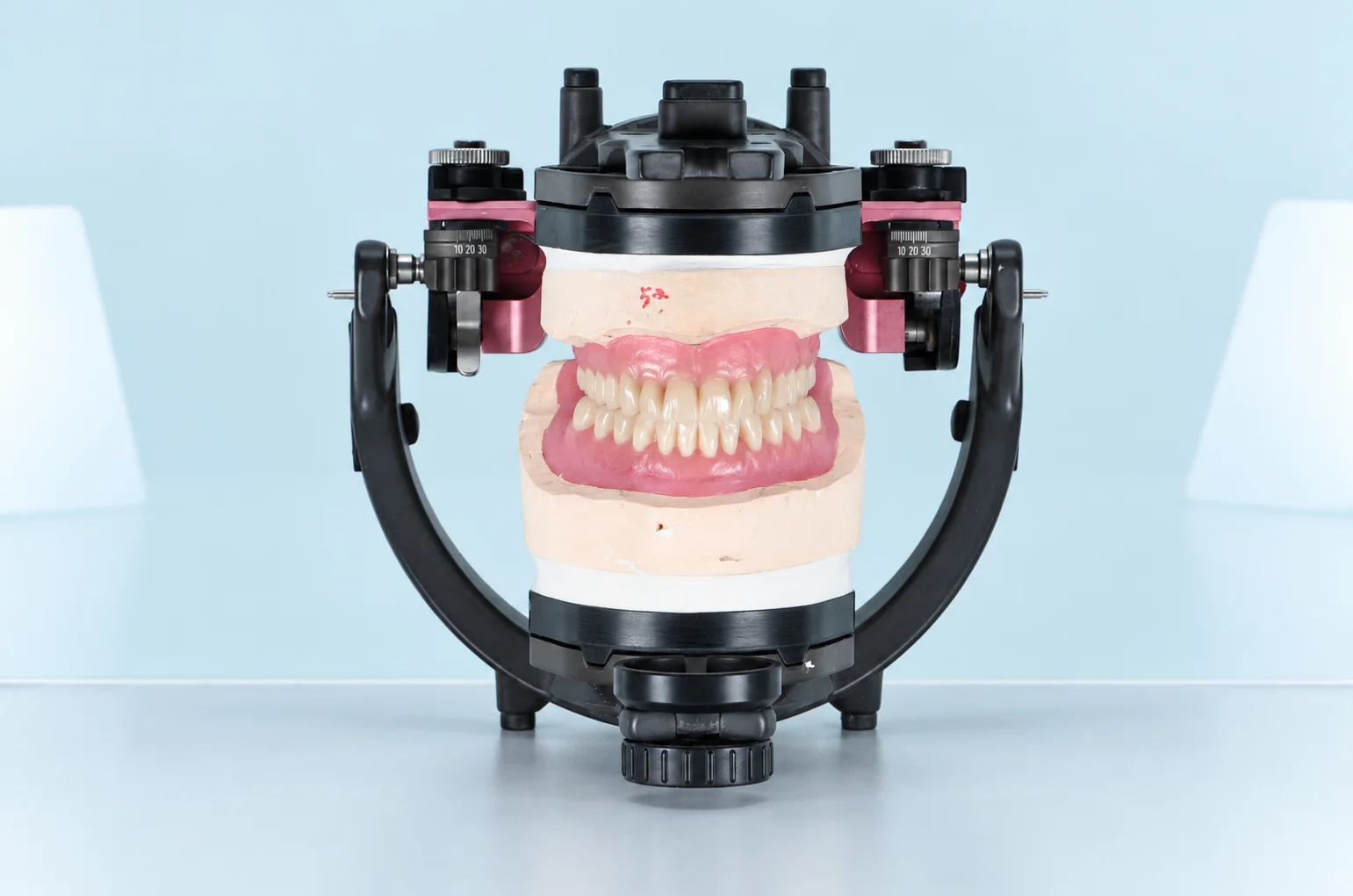
Step 3
Healing and denture records
The timing of denture records depends on the surgical and healing plan. Measurements and clinical records are taken when appropriate to plan the denture, attachments, bite and tooth position.
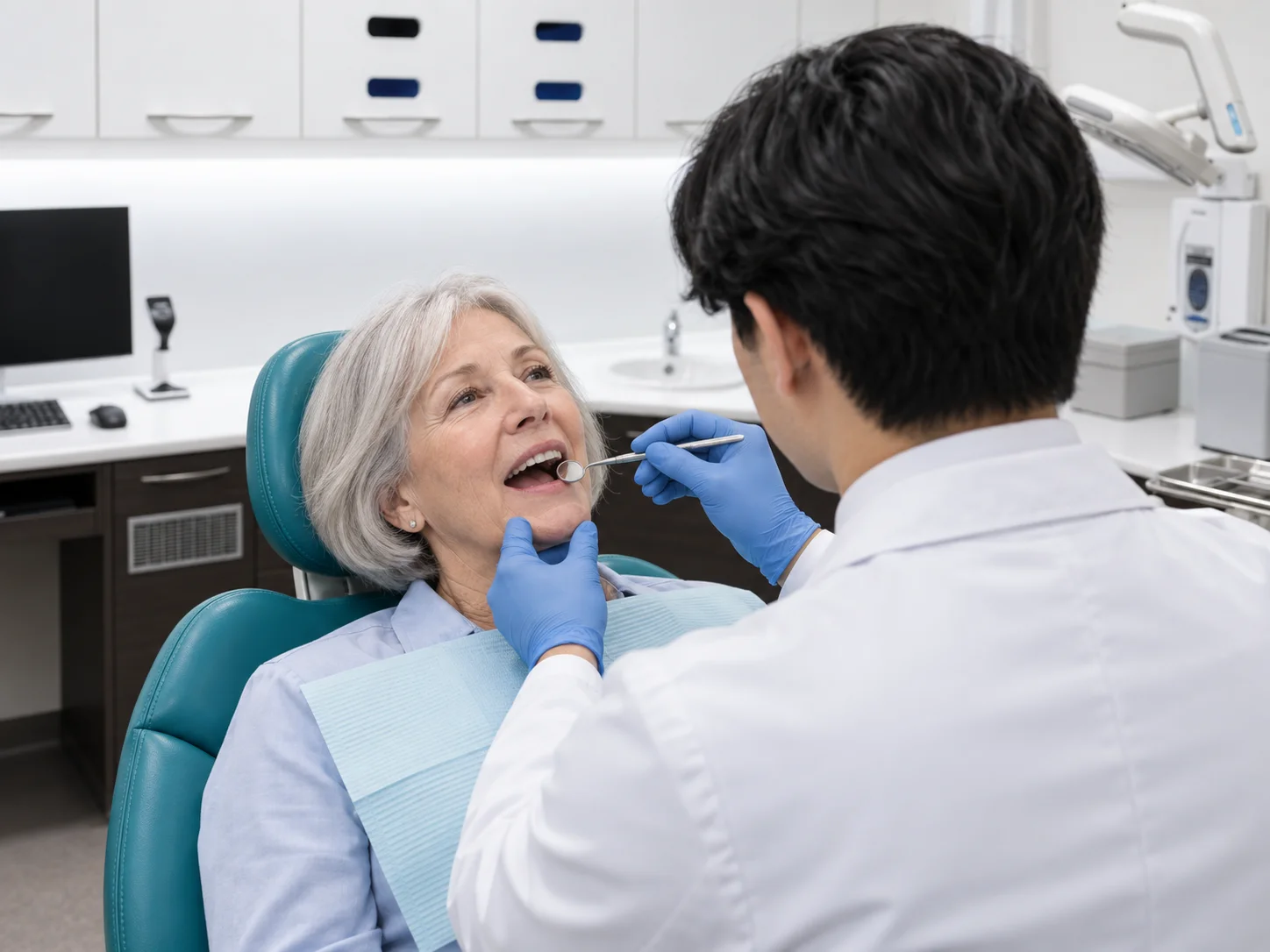
Step 4
Trial, completion and connection
The tooth arrangement and appearance may be reviewed before completion. The finished denture is then fitted and connected to the implant attachments at the clinically appropriate stage.
Step 5
Reviews and ongoing maintenance
Follow-up appointments allow the fit, bite, tissues and attachment function to be checked. Ongoing reviews are important because dentures, attachments and the mouth can change with time and use.
How to care for your implant-supported dentures.
Your daily care routine will depend on the type of denture and attachment system you have. We will show you how to care for yours, but general recommendations may include:
- Remove the denture as instructed for daily cleaning.
- Clean all denture surfaces with the recommended brush and cleaning product.
- Clean around the implants, attachments and gums using the method shown by your treating practitioner.
- Avoid forcing the denture into place if it no longer seats correctly.
- Do not adjust or replace attachment components yourself.
- Contact Urim if retention changes, the denture rocks, an attachment feels damaged or sore areas develop.
- Attend the recommended denture and implant maintenance appointments.
Personally Guided Overdenture Care
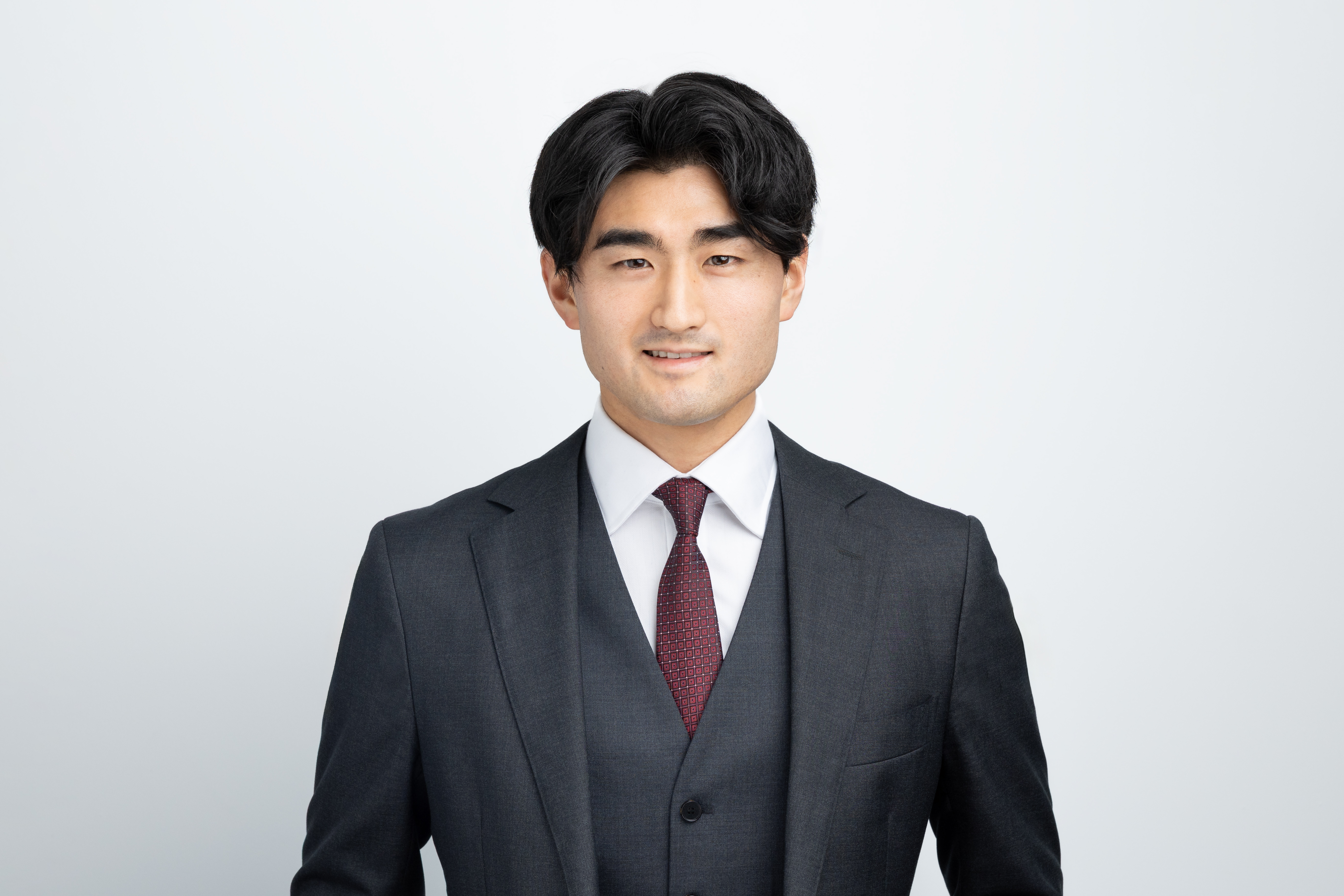
Implant overdenture care led by dental prosthetist Isaac Hoshi.
Denture care is all we do. As the owner and dental prosthetist at Urim Denture Clinic, Isaac Hoshi personally provides the clinical and technical care involved in planning, fitting and maintaining removable implant overdentures.
Clear communication between everyone involved is essential when planning an implant-supported denture. Isaac carefully considers the available denture space, your bite, tooth position, appearance and attachment system, while coordinating with the dentist or specialist responsible for assessing and placing your implants.
(Dip. DT, AdvDip. CDT)
Frequently asked questions about implant supported dentures.
Still have a question?
Yes. An implant overdenture connects to implant attachments but is designed to be removed by the patient for cleaning. It is different from a fixed implant-supported bridge.
There is no single number that applies to every person. The appropriate number and position depend on the jaw being treated, available bone, the planned denture design and the implant clinician’s assessment.
In some circumstances an existing denture may be assessed for modification, but this depends on its fit, strength, design, tooth position, available space and compatibility with the planned attachments. A new denture may be the more appropriate option.
Dental implants are surgically placed by an appropriately trained dentist or dental specialist. Urim focuses on the removable denture component and can coordinate with the practitioner responsible for your implant care.
Yes. The denture, attachment components, implants and surrounding tissues all require ongoing care. Retentive components can wear and the mouth can change, so regular professional reviews remain important.
No. Suitability depends on factors including oral and general health, bone, treatment history, maintenance capacity and the findings of the implant assessment. Your clinicians will explain the relevant benefits, limitations and risks before treatment proceeds.
Fees vary because treatment may include implant assessment, surgery, components and the removable denture, often involving more than one practitioner. You will receive recommendations and quotations relevant to your treatment plan after the necessary assessments.
Timing depends on whether implants are already present, whether surgery or other dental care is required and how healing progresses. The treating team will explain the planned stages and anticipated timing for your circumstances.
Discuss implant supported dentures with Urim.
If you are considering implant supported dentures in Sydney, already have dental implants or would like an existing implant overdenture assessed, book a consultation with Isaac at Urim Denture Clinic in Cremorne.